
In recent years it has been gratifying to see exhibitions in London devoted to women artists, especially those focusing solely on individuals such as Angelica Kauffman, Artemisia Gentileschi and Mary Beale. The Royal Academy now offers the extraordinary work of Michaelina Wautier (1614 -1689), a recently ‘recovered’ late seventeenth-century Netherlandish artist of exceptional talent, whose work has been the subject of ongoing formal reattribution. Due to the ‘unusual potency of her work’, it was assumed until recently that it had been produced by a male painter (Cat. p.11). This modest exhibition, in collaboration with the Kunsthistorisches Museum of Vienna, constitutes most of Wautier’s known oeuvre to date. It is a sobering reminder of the fragility of women practitioners’ artistic identity under the great weight of historic neglect, prejudice and misinformation. Collecting and reassembling the elements of biographical fact, patronage and influences, artistic analysis and studio style have both connected Wautier to her contemporaries and identified the unique contributions she made. The exhibition claims that it is ‘only the beginning of her return to prominence, laying the groundwork for further discoveries.’ In many ways, it subverts the narrative about the restrictions placed on human anatomy studies for women through the evidence of Wautier’s skilled compositions, and her sensitive depiction of character and emotion reflect the knowledge she gained from her travels to Rome. Her close artistic collaboration with her brother Charles (1609-1703), with whom she shared a studio, also points to the importance of such connections in enabling a woman’s career to progress.
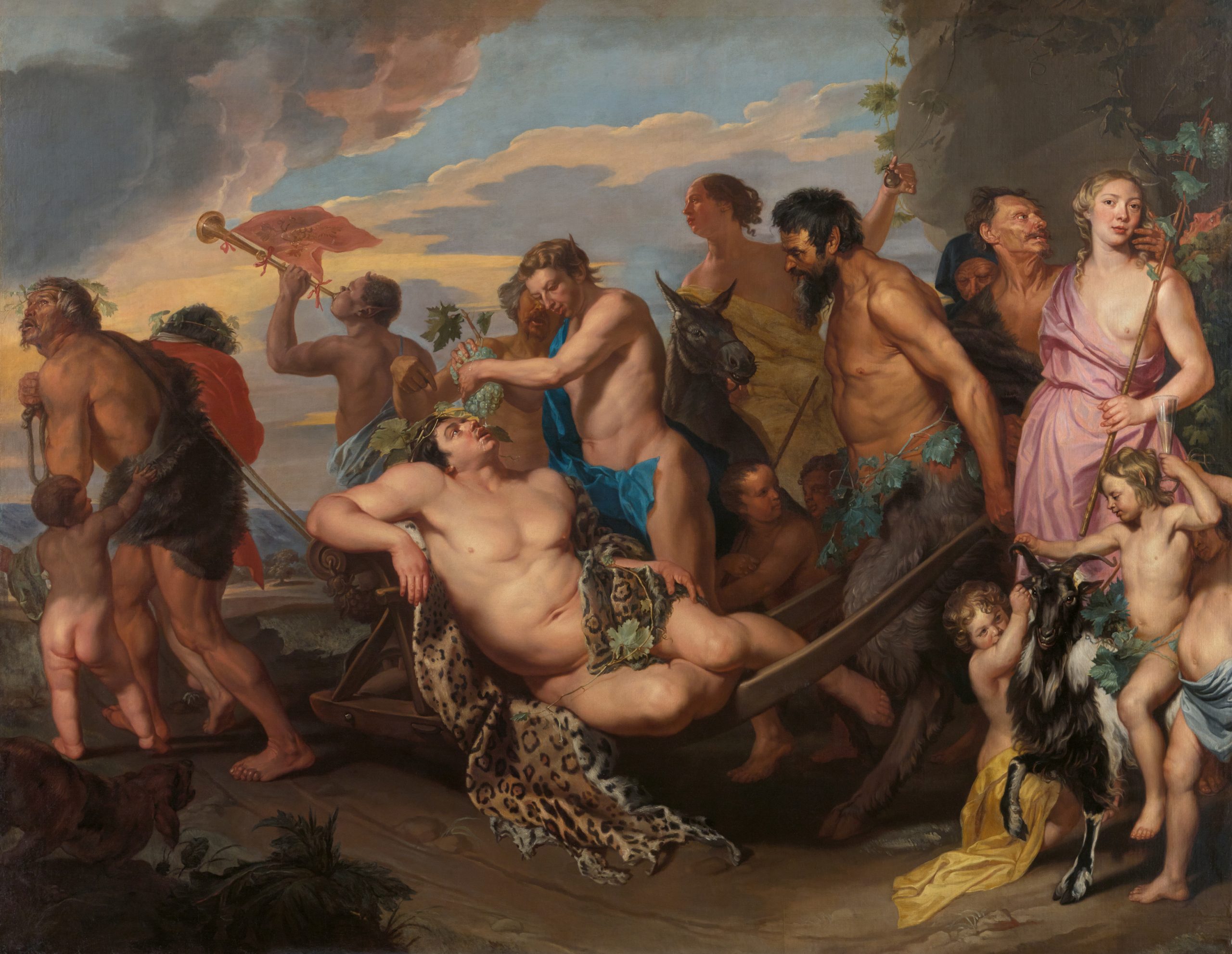
Wautier was born in Mons in c.1614, to a large family, one of her brothers serving as a cavalry officer, another as a pastor. From the 1640’s she and her artist brother moved to Brussels, close to the court of Archduke Leopold Wilhelm, governor of the Spanish Netherlands from 1647 to 1656, which proved a lucrative decision. The Archduke bought four of her works, three paintings of saints and The Triumph of Bacchus, c1655-59 (Kunsthistorisches Museum, Vienna). She and Charles painted many portraits of courtiers, though some are now lost or are represented only in prints. She completed her last known work, The Annunciation, in 1659 and she died in 1689 at the age of seventy-five. After her death, Charles became preoccupied with his own artistic legacy and Michaelina’s name faded into obscurity. Her life is in many ways defined by loss, since the vital documents which could inform us about her life are missing. Her will was destroyed during the French bombardment of Brussels in 1695, and three years later her art collection and that of her brother was auctioned but no catalogue survives. In addition, confusion over her name in the Archive has resulted in misattributions. However, now that her name is established, no doubt new evidence will emerge.
The exhibition divides Wautier’s career into three sections, each providing rich colour backdrops to her paintings. The first begins with her only known drawing, Study of the Medici Ganymede Bust, c.1640–50 (private collection), and a caption stating that ‘by signing the sheet, she asserted her mastery in depicting inanimate objects’. It also immediately locates Wautier within a European tradition of artistic practice, access to classical models and drawing after the antique which was usually denied to women artists but which her brother encouraged. Her Self-Portrait (1650, private collection) is placed alongside that of Peter Paul Rubens’ Self-Portrait (1638, Kunsthistorisches Museum, Vienna) as a further mark of her historical importance. Rubens did not depict himself as a working artist but Wautier chose to place herself before an easel. A caption states that ‘Women painters were the first artists to depict themselves at work’. There are similar depictions of themselves by other seventeenth-century artists such as Sofonisba Anguisola, Artemisia Gentileschi and Mary Beale. An outline drawing appears faintly on Wautier’s blank canvas, and her focus is intent on her subject beyond the frame. She is ready with her palette, and her delicate right hand is poised with a brush. But her rich silk dress, linen kerchief, black velvet cloak and pearl necklace speak of status and comfort rather than effort or precarity. They showcase her skill in representing a variety of fabrics, but exemplify the perceived risk attached to any suggestion of engagement with an artist’s working environment with all its physical, cluttered disorder, its oils and pigments.
One more self-portrait exists. In her The Triumph of Bacchus, the key work in the exhibition, Wautier depicted herself as a bacchante in the right of the frame with her vine-entwined thyrsus staff. She is the only figure who gazes calmly at the viewer, her pale skin and pink robe contrasting with the many different skin tones and poses of the group, unaffected by the lascivious satyr attempting to gain her attention. Most startling is the central lounging figure of a decadent Bacchus, his distended torso and constricted thighs barely contained in the makeshift carriage of a wheelbarrow which is awkwardly pulled across the picture plane by aging satyrs, accompanied by his entourage of nymphs, fauns and small boys playing with a goat. The painting is surprising on many levels. Though classical subjects could provide many positive references for women artists, this bold choice of Bacchic revelry raises questions about Wautier’s purpose which are as yet unanswerable. However, her skills in large-scale composition, life-drawing and painting techniques are clearly on display.
Wautier’s group of canvases on The Five Senses (1650), did not use an uncommon theme. Jan Brueghel the Elder and Peter Paul Rubens produced an elaborate series on the subject in 1617-18 using female allegorical representations (now in The Prado, Madrid). However, Wautier’s boy figures each demonstrate an aspect of the visceral nature of sensual experience. Each face and character is distinct, often identifiable in other genre paintings and likely to be Wautier or her brother’s studio assistants. They are absorbed in the activity they represent. Carefully observed hands show the slim fingers gripping a flute or manipulating a pair of spectacles or piece of bread, pinching the nose or displaying a painful injury with varying degrees of tension, expert foreshortening and expressive modelling.
Wautier’s studies of women and aged men have the powerful sense of individual personality which, in contexts of religious compositions, brings the immediacy of human experience to such familiar subjects. The doubt and defensiveness in her otherwise compliant virgin (The Annunciation (1659, Musée du Domaine Royal de Marly, Louveciennes, dépôt de la Ville de Marly-le-Roi) offers a complex psychological portrait of the chosen mother-to-be. She is the older version of the intelligent, independent girl who interacts with her aging and bewildered parents in The Education of the Virgin (1656, private collection). The newly documented artist is a worthy addition to the list of talented women artists who are now celebrated in art historical narratives, although she should never have disappeared and her abilities should not have been routinely dismissed. This exhibition is worth exploring and savouring in the expectation or more to come.